Brands are usually judged by their visible layer first. Typefaces, colours, imagery, motion, styling. These are the things people notice immediately, so they often become the centre of the conversation. But surface only stays convincing when something deeper is holding it together.
A strong system decides how a brand behaves before it decides how a brand looks. It sets the logic for spacing, hierarchy, density, pacing, repetition, and contrast. It defines how flexible the identity can be before it stops feeling like itself. Without those rules, even good visual work begins to drift.
What the Surface Cannot Do Alone
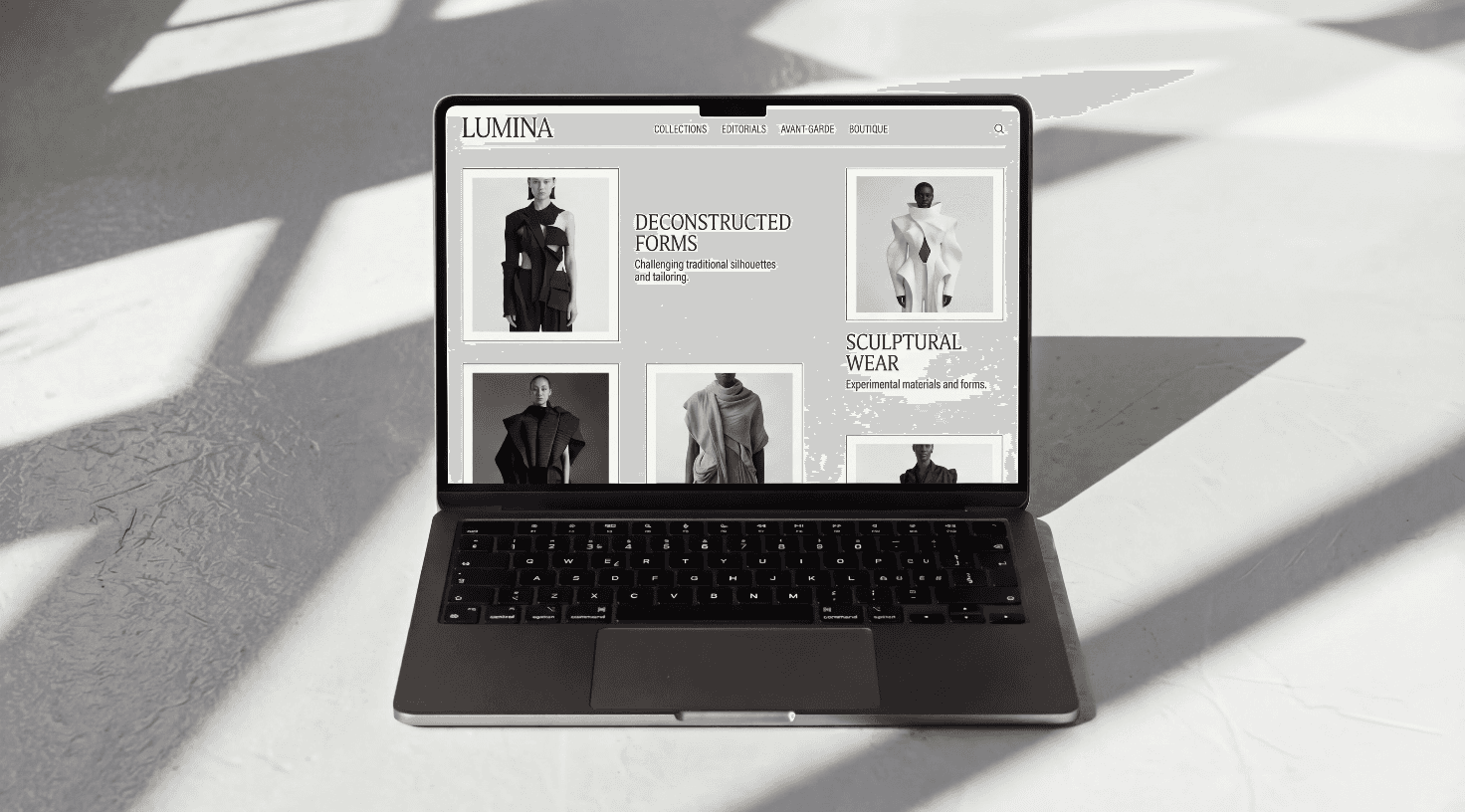
A homepage can look refined in isolation. So can a launch asset, a deck, a campaign frame, or a product page. The real test is not whether one screen works well. The real test is whether all of them still feel related once the brand starts moving across formats and contexts.
That is where surface begins to fail on its own. A good art direction moment can carry attention briefly, but it cannot create continuity by itself. Once more teams, more pages, and more content enter the system, inconsistency appears quickly. Different scales of typography begin to creep in. Image treatment shifts. Layout logic changes. Tone becomes unstable.
Systems Create Endurance
A system protects the brand from that fragmentation. It makes decisions repeatable. It defines what should remain fixed and where flexibility is allowed. It gives designers and developers a shared language. It gives the brand a stable centre.
This matters even more in digital work because the environment is never static. Campaigns change. products expand. pages grow. media gets repurposed. The system is what allows the brand to stretch without losing form. It creates continuity not by forcing sameness, but by keeping the relationships between elements intact.
Why This Reads as Premium
What many people describe as polish is often just structural consistency. A site feels resolved because margins hold. A campaign feels expensive because image pacing is controlled. A brand feels confident because its tone does not shift every time the context changes.
Surface attracts. System sustains. One gives the work its first impression. The other gives it staying power. If the foundation is weak, the visual language will eventually show it.
Brands are usually judged by their visible layer first. Typefaces, colours, imagery, motion, styling. These are the things people notice immediately, so they often become the centre of the conversation. But surface only stays convincing when something deeper is holding it together.
A strong system decides how a brand behaves before it decides how a brand looks. It sets the logic for spacing, hierarchy, density, pacing, repetition, and contrast. It defines how flexible the identity can be before it stops feeling like itself. Without those rules, even good visual work begins to drift.
What the Surface Cannot Do Alone
A homepage can look refined in isolation. So can a launch asset, a deck, a campaign frame, or a product page. The real test is not whether one screen works well. The real test is whether all of them still feel related once the brand starts moving across formats and contexts.
That is where surface begins to fail on its own. A good art direction moment can carry attention briefly, but it cannot create continuity by itself. Once more teams, more pages, and more content enter the system, inconsistency appears quickly. Different scales of typography begin to creep in. Image treatment shifts. Layout logic changes. Tone becomes unstable.
Systems Create Endurance
A system protects the brand from that fragmentation. It makes decisions repeatable. It defines what should remain fixed and where flexibility is allowed. It gives designers and developers a shared language. It gives the brand a stable centre.
This matters even more in digital work because the environment is never static. Campaigns change. products expand. pages grow. media gets repurposed. The system is what allows the brand to stretch without losing form. It creates continuity not by forcing sameness, but by keeping the relationships between elements intact.
Why This Reads as Premium
What many people describe as polish is often just structural consistency. A site feels resolved because margins hold. A campaign feels expensive because image pacing is controlled. A brand feels confident because its tone does not shift every time the context changes.
Surface attracts. System sustains. One gives the work its first impression. The other gives it staying power. If the foundation is weak, the visual language will eventually show it.
(ESSAY)